
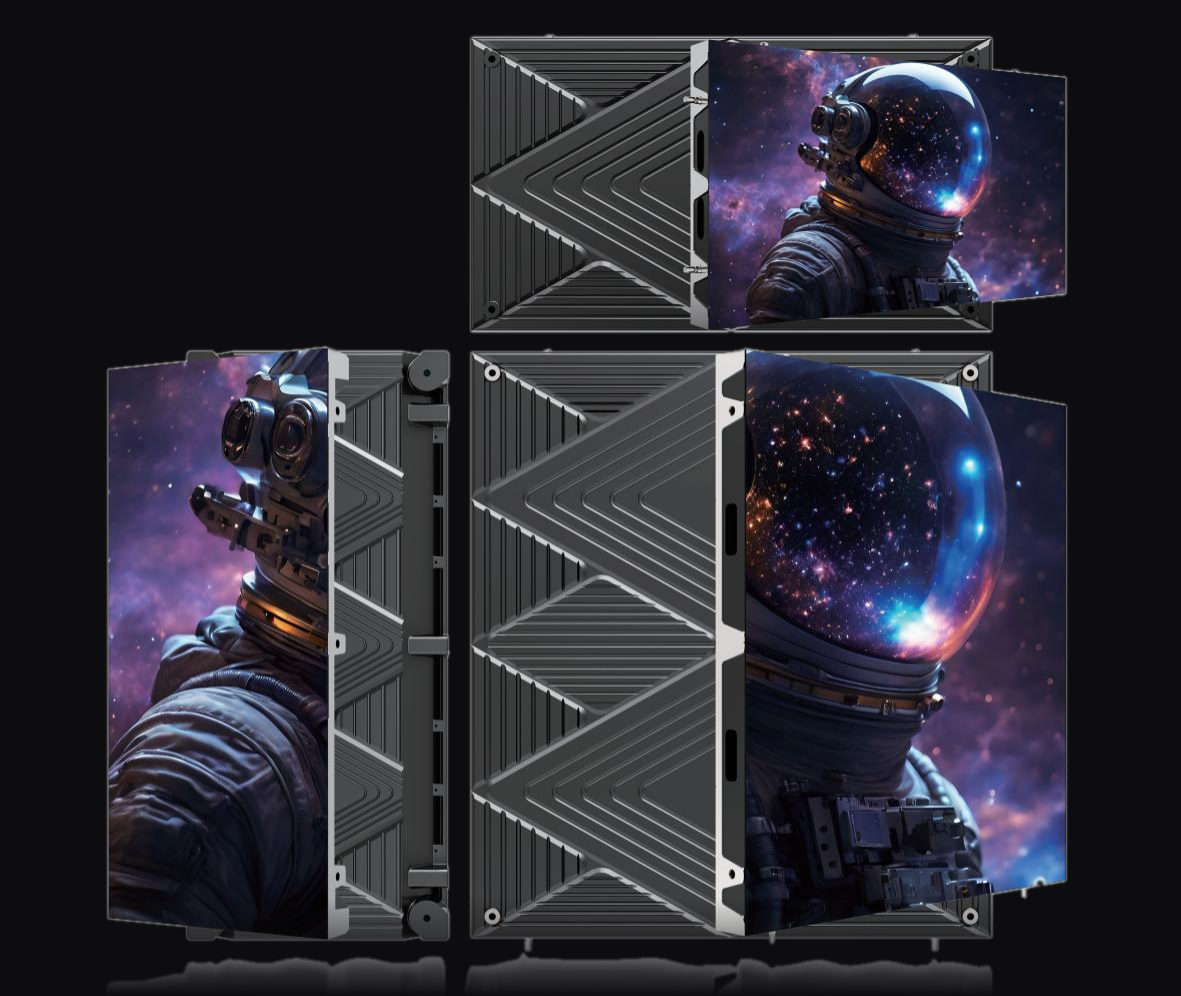

“Which pitch should this project use?” is the question that comes up in almost every scheme discussion, and the answer combines viewing distance, content type and budget.
Why Pitch Is Not the Only Number
Pixel pitch determines the minimum viewing distance and the baseline sharpness. The industry rule of thumb is that the minimum viewing distance in metres is roughly the pitch in millimetres multiplied by 1,000 — so a P2 screen resolves cleanly from about two metres.
Three other variables have to be weighed alongside it: the content (a high-definition film, or dense data and text), the ambient light (a dim control room, or direct sunlight outdoors), and the budget envelope.
Command Centres: P0.6 to P1.5
Operators sit one to three metres away and watch for long shifts, so detail has to be exact. Information density is high, with GIS maps, network topology and live data streams displayed without seams, and any visible pixel structure slows interpretation.
P0.9 to P1.5 is the mainstream high-value choice; P0.6 serves the premium projects that need maximum information density. COB is increasingly preferred here for contrast, reliability and stability.
Meeting Centres: P0.9 to P1.8
Typical viewing distance runs three to eight metres, where P1.5 to P2.5 balances image quality and cost. Content is mostly slides, documents and video conferencing, so text edges and skin tones must be clean and even.
P1.5 to P1.8 is the safe range for medium and large rooms; for boardrooms and corporate headquarters where the room itself is part of the message, P0.9 to P1.2 lifts the perceived quality of the space.
Showrooms and Auditoria: P1.25 to P2.5
The goal is brand presentation and visual impact at three to ten metres. P1.8 to P2.5 is the value sweet spot and the most common choice; digital showrooms where visitors come close to interact should move to P1.25 to P1.5.
Stage Screens: P1.5 to P5.9
Audiences sit beyond five metres, where the eye can no longer separate P2.5 from P3. What matters is the whole image and the atmosphere. P3 is the sweet spot for a main stage screen, protecting cost without giving up clarity where it counts.
For stage floor tiles, which are viewed vertically and carry load, the structure differs from a wall; P5.9 is a mature, fully viable choice there.
Retail: P1.5 to P7.8
The goal is drawing people in, carrying the brand and improving the experience, increasingly while disappearing into the architecture. Conventional indoor advertising and interactive screens work at P1.5 to P2.5.
Transparent screens, which have grown quickly, exist to keep the space visually open while carrying content; P3.9 to P7.8 balances image and transparency and has become the default for shopping centres and glass facades.
Outdoor Advertising: P4 to P10 and Above
Viewing distances run from tens to hundreds of metres, and pitch stops being the leading specification. What takes over is brightness of 6,000 to 12,000 nits against direct sunlight, protection of IP65 or better, and reliability that keeps maintenance cost down. P8 is the mainstream choice for outdoor media.
Beyond Pitch: What Actually Wins a Tender
-
Refresh and camera compatibility Any project that will be filmed — launches, broadcast, XR — needs refresh of 7,680 Hz or more to avoid scan lines and moiré.
-
HDR Real HDR requires high brightness, high contrast and wide gamut together; pitch alone will not deliver it.
-
Maintainability For high-level or recessed installations, front maintenance and the reliability of fine-pitch COB or QCOB are value, not extras.
Pitch is the start of a specification, not the end of one. The right selection comes from a precise reading of what the room has to do.
Pitch Advice for a Live Project
Send AET the room dimensions, viewing distance, main content type and budget range, and the team will return a pitch recommendation with a cabinet layout.
Related Articles & Insights
AET Opens Global Recruitment Across R&D, Sales and Service
AET has opened a global recruitment round covering display research, engineering, overseas sales and field service.
Five Extremes: How AET Plans to Grow
Minimalist architecture, frontier technology, visual quality, fine pitch and fast service: the five directions AET has organised i...